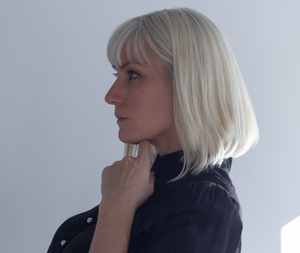
Ep. 004: Danielle Lee Darling | Quantum Heal Your Love Patterns
Watch above or on YouTube and hit subscribe — that's where we're building our home base.
Prefer another platform? Find us on: Spotify | Apple Podcasts | Amazon Music and more!
What’s really happening when the people you’re attracted to are consistently subpar?
Danielle Lee Darling is a Soul Sovereignty Coach and healer based in Nashville who helps women break the cycle of heartbreak and find love by first finding themselves.
Every layer of who you are is informing who you attract and why. Danielle gets to the root of her clients’ subconscious beliefs by addressing them on a quantum level. We’re talking DNA, past lives, ancestral downloads, and then some.
In this episode:
How “what you believe, you receive” is quietly shaping your dating life (~9:00)
The 3am intervention from God that ended a toxic relationship (~15:41)
The Moksha Method: how a music-driven healing modality dropped in during a retreat (~21:19)
She passed the "test” date and met her partner the next week (~25:33)
Even in the right relationship, old wounds get triggered (~28:24)
How love patterns can show up in your career, too (the performer archetype client story) (~34:15)
What happens to your nervous system right after a big healing breakthrough (~51:11)
Book Recommendation:
The Myth of Normal by Gabor Maté, MD — on how the body manifests pain and emotion
The Secret Language of the Body by Jennifer Mann and Karden Rabin — a metaphysical anatomy resource guide
Metaphysical Anatomy by Dr. Evette Rose — a deep-dive reference for reading the body's signals
Did you know all of our guests recommend books to enhance your intuition?
Find this one and more on our book recommendations page!
Free Resource:
Not sure what your love pattern is? Danielle's free Love Pattern Quiz will show you exactly what's running the show: https://danielleleedarling.com/lovequiz
Danielle’s Program:
The Sovereign Love Academy is a 12-week virtual container covering love patterns, intimacy, inner child work, self-worth, and more, with weekly group healings and a live data-ing debrief coaching call: https://danielleleedarling.com/sovereign-love-academy
Connect with Danielle Lee Darling:
Instagram: @danielleleedarling
TikTok: @danielleleedarling
Facebook: @danielleleedarlingbusiness
Did this episode stir something in you? We love that for you! Subscribe so you don't miss what's coming next!
-
There Will Be Signs (00:00) What if the universe is in a constant state of sending you feedback? Welcome to There Will Be Signs, a podcast that celebrates the stories, synchronicities, and strange nudges that remind us there's more to life than what we see. Here we'll talk to deeply intuitive guests and offer practical ways to connect to the magic, whimsy, and unseen helpers that exist around you every single day — because you are supported, dear listener. It may not always feel that way. There will be signs.
Killian (00:33) Welcome back to another amazing episode. I'm really excited about this one. Hi Amanda.
Amanda (00:40) Hello, hello.
Killian (00:42) How are you doing today?
Amanda (00:43) Good. I'm excited to talk to Danielle — see what that awakens in me this week.
Killian (00:49) I am too. Let's see what the conversation stimulates. It's interesting, right, because Danielle's a little different from some of our other guests in terms of what she focuses on. Let me read her bio: Danielle Lee Darling is a soul sovereignty coach and healer based in the Nashville area who helps women break the cycle of heartbreak and find love by first finding themselves. Her work gets to the root of what most methods miss — healing the subconscious beliefs that have been quietly running the show, so women can stop repeating the same patterns and become sovereign, secure, and unfuckwithable. I love that. She's the creator of the Love Pattern Framework and the soon-to-launch Sovereign Love Academy, a transformational container for women who are done with surface-level solutions and ready to change their love story from the inside out.
Amanda (01:42) Love that.
Killian (01:42) We haven't really talked to somebody yet who's been focused this much on the interpersonal side of the human experience.
Amanda (01:48) Yeah, I think there's going to be a lot to talk about. Like a lot, a lot.
Killian (01:53) I wonder if we'll be able to stick to an hour here — we're not going to get it all.
Amanda (01:55) We're not gonna get it all, no. I already know that. There's just too much. It's something we all find so interesting, because we're all narcissists — a little bit, yeah.
Killian (02:12) We're diagnosing all our listeners as narcissists — stick with us.
Amanda (02:16) I am a little bit. I think everyone's a little interested in learning about why we tick.
Killian (02:21) Of course, yeah.
Amanda (02:22) I think that's why all these guests are so fascinating — based on your teachings and everything you're working on, you know an element of why I am who I am.
Killian (02:34) Mm-hmm.
Amanda (02:35) And I think that's really fascinating — getting to hear this new method, this new version, this new way of understanding why we are who we are and why we do what we do. It's endless. Endless possibilities.
Killian (02:50) Yeah, and as we've heard a few of our guests say, and it's so true — isn't there something so deeply healing just about being seen? And being seen from a different angle feels just —
Amanda (02:57) Yeah, yeah.
Killian (03:00) — as good. Like, "somebody gets me."
Amanda (03:04) It's validating narcissists. See?
Killian (03:10) I don't know about that.
Amanda (03:12) Okay, maybe not that. But it is, you know — it's about you.
Killian (03:17) I mean, narcissism is a really interesting — we're not gonna dive into the ins and outs of narcissism, but I do think there's a fine line between the very normal, deep, tender need to be seen, and the very pushy, "you have to see me a certain way" performative way that narcissists operate.
Amanda (03:38) Well, I wasn't thinking about it that way. I just thought about it as the "me, me, me" portion.
Killian (03:42) Sure. Hey, maybe that's a part of you that needs a little love. It's okay to be a little "me" sometimes.
Amanda (03:48) Yeah. Some friends might disagree that I don't need more of that, but who knows? It's not about them, is it? It's about me, me, me.
Killian (03:56) It's about me, me, me at the end of the day. I was going to say one more thing before we dive in, but I can't remember what it was.
I do have one thing I want to request of listeners, now that we're a few episodes in — because we have this short amount of time to talk to these amazing people who come on the show, if there's anything coming up for you where you're like, "I really wish they'd dug in more on this," please feel free to reach out. Leave a comment wherever you listen if it lets you, or find us on Instagram at There Will Be Signs Podcast and send a DM. Make some comments on stuff you see. Just let us know what you want more of, because in season two, we're going to keep that in mind and start asking those questions.
Amanda (04:50) Yeah, that'd be really helpful, I think.
Killian (04:51) Yeah. But in the meantime, we're just gonna make some guesses — guess what you want to hear, drive with what's fueling our own curiosity, and go from there.
Amanda (05:00) I'm gonna talk about what I find interesting — me, what I wanna know — me, maybe what you like.
Killian (05:03) Yeah, me, me, me. In the meantime, enjoy the me of it all. Let's dive in.
Killian (05:13) Hi Danielle, thanks so much for being here with us today.
Danielle Lee Darling (05:17) I am so grateful for the chance to connect. This is exciting.
Killian (05:18) It's so fun. This is our first season, so we're always just truly grateful for guests taking a shot — it's not live yet, so you're just like, "sure, I'll do this with two strangers, sounds fun."
Danielle Lee Darling (05:33) Yeah.
Amanda (05:33) It's like talking to two strangers who will soon become your new friends.
Danielle Lee Darling (05:40) Well, that's the thing — when you walk into this world of spirituality and intuition, you just meet the best people, and it's about trusting that your paths are going to cross with the right people at the right time.
Killian (05:52) Yes, yes, and that's what this is all about — right place, right time.
I want to dive in, because I did a little research, was looking at your website, and I think what you're doing is very cool. What I really love is that you're focusing a lot on connection and relationship — this interpersonal dynamic that we don't often talk about. Often when I think about going to a spiritual healer or guide, there's a lot of inner work around your own life or career, these external things. So it's really cool to talk to someone focusing so much on the interpersonal connection of it all, and how we relate.
Danielle Lee Darling (06:32) Yeah. It's the desire for that connection that brings us to this healing, right? So many people out there are searching for their soulmate. I went through my own spiritual journey to find my partner, who is the most amazing man I have ever met — more than I could have ever dreamed to manifest. I'm excited to take women through that same path so they can experience it too.
Killian (06:58) Yeah, my gosh.
Amanda (06:58) I think I can hear a line of women already signing up, just based on that.
Killian (07:03) Just based on that.
Amanda (07:04) I think I hear it outside.
Killian (07:08) They're knocking at the door.
Danielle Lee Darling (07:09) I have a wait list starting for my program that's opening in July, so I'm excited to open the doors.
Killian (07:15) That is amazing. Okay wait, I have so many questions even just based on what you said. First of all, you talk about quantum healing on your site — can you tell us a little about what that is?
Danielle Lee Darling (07:29) Okay, so the idea of the quantum field is that time is not linear — everything is happening all at once, all at the same time. The healing I do is on the quantum level, on the DNA level, because our epigenetics — our genetic experience and everything we've downloaded from our ancestors — is within us, and that's one timeline. We also have our past lives, which are informing our DNA and everything that's part of who we are. And then there's our soul, our soul contract, the agreements we've made for this lifetime, plus our lived experience. All four of those combine, and the healing I do works on that quantum level — it lets us access all the time periods at once, so you're able to change your DNA, change your neuroprogramming, and make a quantum leap.
Killian (08:27) That's amazing.
Amanda (08:28) Woo!
Killian (08:28) So you get into past lives with your clients — you get into all of it, combine it all. That's so cool.
Danielle Lee Darling (08:33) All of it. Mm-hmm.
Killian (08:35) Okay wait.
Danielle Lee Darling (08:36) Because it all informs it, right — it's not just one thing.
Amanda (08:37) Mm-hmm.
Killian (08:38) Yep, yeah, it's all part of us — all of it is informing the decisions we make, the beliefs we have, the ways we might self-sabotage, speaking for myself here. So I love that. But the first question that came to mind — it's a silly question, but I have to ask it — in working with women, I feel like a lot of the messaging I'm getting through my feed is that there's just, quote-unquote, "no good men anymore." A lot of focus on men taking a path that just isn't aligning with women in today's culture. What's your take on that? Do you feel like that's real, or are there plenty of men basically?
Danielle Lee Darling (09:18) Yes and no. First of all, that's very common, and I actually had that belief myself. That was part of my healing process — I'm a molestation and sexual assault survivor. I had a deep wanting for a relationship, but actually, in my subconscious, I had a hatred toward men imprinted within me, and I had to heal that. So my thing is: what you believe, you receive. If you believe there are no good men out there, well, what are you going to get in your dating algorithm on the apps?
Amanda (10:02) That's a great point.
Danielle Lee Darling (10:03) You're going to get all the guys who only reinforce that belief within you. I had deep beliefs that I wasn't enough, that all men would hurt me — so what did I attract? Men who reinforced all of that, until I changed the beliefs within myself. The men I started to see on the apps completely shifted.
Amanda (10:29) That's like everything in life — you put it out there, and that's what you get back. I remember so many people telling me everyone in LA was awful before I moved out here. I was like, well, let me go out and check. And then people would ask me, "how did you meet these wonderful people?" I'm like, all I've met are wonderful people. I think it's the filter you put out there — you're just like, "I'm not taking that," and you get what's great instead. The frequency filter.
Danielle Lee Darling (10:55) It's the frequency, mm-hmm, and everything that's going on — go ahead.
Killian (10:59) No, no, no, I was just going to say — are most of your clients, I should have been more inclusive here — obviously some women are looking for women too, but are most of your clients looking for men? Are they all over?
Danielle Lee Darling (11:13) Absolutely. They're all over, and generally — with the wording on the website I use "heterosexual relationships" — but I've worked with all types of relationships before.
Killian (11:24) Sure. Yes. I was just curious, because I feel like traditionally heterosexual relationships tend to have the most obvious friction — "men are from Mars, women are from Venus," we're opposites, we can never understand each other.
Danielle Lee Darling (11:43) Mm-hmm.
Killian (11:47) So it makes sense there might be more deprogramming to do in that realm.
Danielle Lee Darling (11:53) Yeah, and I think we're seeing that on a grander scale too, with the patriarchy dismantling and the rise of the matriarchy — the tension and friction in the overall collective. That's another level of the quantum healing we have to address as well.
Killian (12:10) Yes. Oh my gosh — I love that you just said "the rise of the matriarchy," because I want to believe — I kind of have to believe that's where we're going. It feels like all this resistance to what's happening is so feminine. It's like we want to support our people, we want to nurture the people in this world.
Danielle Lee Darling (12:34) Yeah.
Killian (12:39) Do you f—
Danielle Lee Darling (12:39) I'm really excited for the shifts coming by 2030. And I want to say this gently — it's not about the rise of the matriarchy taking over the patriarchy, it's about the balancing of the two. Because women have also been living too strongly in their masculine energy for eons, and now we're balancing out our femininity, which allows the whole collective consciousness to come into balance too. So yeah, I agree with you — I'm very excited about what's to come.
Killian (13:09) I think your connection might be — are you seeing a little bit of a spotty connection, Amanda?
Amanda (13:17) Yeah, I was just going to say, ever since we started talking about "it's not the rise of the matriarchy," it got a little funky for me — I don't know if that's how it recorded on your end, Killian.
Killian (13:31) I think this records locally, so my hope is once we post this, even if it got a little spotty, it'll still be clear once we get the file. But Danielle, if you don't mind repeating yourself a bit, that would be great.
Danielle Lee Darling (13:48) Would you like me to say that again? So I want to be clear — it's not necessarily, when I say "the rise of the matriarchy," about matriarchal energy taking over the patriarchy. It's about bringing it back into balance. Even within women in the Western world, we've been far too much in our masculine, so now we're coming back to our feminine, which allows the whole energy to shift.
Killian (14:16) That makes so much sense.
Danielle Lee Darling (14:16) That's what I don't want it to sound like — "it's gonna be the matriarchy or nothing." It's gonna be a balancing.
Killian (14:19) All women all the time. Right, right.
Amanda (14:21) Yeah.
Danielle Lee Darling (14:23) There's masculine and feminine within each of us, and it's about bringing that into balance and harmony — which is what we need for more harmonious relationships, romantically especially.
Killian (14:35) Yeah, we all need that.
Amanda (14:36) We love harmony.
Killian (14:37) We do, we love harmony, and we could all benefit so much from tapping into that balance — men included, right? I think — this is coming from personal experience — watching men become fathers can be such a beautiful thing to witness, because you start to see some of that more nurturing energy come into the picture. This balance is so powerful in all of us.
Anyway, I'm so curious about your journey specifically — what got you onto this path. You mentioned on your website that you had an intervention from God, and that feels like a really big sign. We're all about big signs — do you mind diving into that?
Danielle Lee Darling (15:27) Yeah, I want to talk about a couple different signs — signs I didn't see at the time that in hindsight were very clear, and then the sign I talk about on my website. As I mentioned, I'm a sexual assault survivor, and out of that experience I hightailed it directly for a man who was exactly like my father, as we do, you know, because I hadn't done any of my own healing. A good, loyal, hardworking man who exacerbated every single one of my wounds. We were married about 13 years — he's a great co-parent and partner now, but we just weren't compatible.
I remember early on, a couple of years into the marriage, I went to a girls' weekend, reconnecting with all my girlfriends from college. I let out everything I was frustrated with, the pain, the heartbreak, the aloneness I was feeling in my marriage — and I produced a full-torso rash, excruciatingly painful, red, burning. Nobody else got it. We were trying to figure out how I'd gotten it. Now, part of what I use in my healings is metaphysical anatomy, and that was a clear sign in hindsight. That's one thing I really want to bring to your listeners — our bodies, as they say, keep the score, and we need to listen to it. That pain in your back, the ache in your shoulder, the lump in your throat — it's all part of the bigger picture of emotions that need to move through, circumstances in your life that are no longer tolerable, because your body will try to get your attention. It's usually a last-ditch effort when the body gets inflamed. That's how we live in dis-ease.
So I didn't listen to my body, obviously — continued the relationship, had two beautiful children, and just kind of came to a point where I couldn't do it anymore, and I asked for a divorce. Right after that, I got involved with a covert narcissist. My deep core belief, as I said, was that I'm not enough — and then I had a relationship that exacerbated that wound. Coming out of the divorce, I was just fodder for a narcissist, right? Easy to get the hooks in because I was so starved for love and affection, that cherishing. He was so great with his words — he was a musician, wrote songs about me, it was so romantic — and then a couple things started coming up.
I joke that I was so deep in my "love pattern" — which is what I teach in my practice — that God himself had an intervention with me. There was one night he'd left in the middle of the night during one of his tantrums, and I woke up at 3am on the dot, felt a whoosh come over my entire body, and heard a clear voice on my right side say, "The relationship is over, Danielle." Had that not happened, I feel like I would have gotten hooked right back in. That was the foundation I needed to fully step away from that toxic situation.
Amanda (19:19) Those 3-4am wakeups — they are deep. I have those often.
Killian (19:19) Sometimes we need —
Amanda (19:21) Yeah.
Killian (19:25) I was going to say, that is like the prime time. Can you tell us a little about why that's the prime time these channeling signals seem to come through?
Danielle Lee Darling (19:38) Yeah, they say that time of night is when the veil is thinnest — when spirit is allowed to come through with more force. That's typically what I hear about it, and I've just learned to trust it, especially when it comes in around that time of night.
Amanda (19:57) I gotta start listening.
Killian (19:57) Yeah. And when you hear a voice that clearly — in so many ways, I'm thinking, wouldn't we all be so lucky to get signs that clear? Like, "move on, this is over."
Amanda (20:10) Yeah.
Killian (20:11) But —
Danielle Lee Darling (20:14) Yeah, I know, and I tell you what, I've had a little bit of a teenage temper tantrum about it ever since, because I'm like, "that was so clear — could you help me out here a little more? Can I get a clearer sign?" You know?
Amanda (20:29) Yeah.
Danielle Lee Darling (20:31) Right. But I think that a lot of times, especially in our society, we're just hustling and grooving and moving so fast, and we don't leave enough room in our day, in our schedule, to allow for those synchronicities — for those moments of inspiration, those "ooh, I think I'm craving an açaí bowl, I'm gonna go do that" instead of, "no, I have this lunch date scheduled." We're not allowing for it. So part of my practice is trying to allow a little more flexibility in my schedule, so that when intuition hits, we can run with it and just see where it goes.
Killian (21:18) Yeah, yeah, yeah.
Amanda (21:21) Mm-hmm.
Killian (21:22) Now, you talked about hearing that voice come in through the right side — do you tend to experience the Clairs? Do you feel like you channel pretty frequently, and if so, how do you experience that?
Danielle Lee Darling (21:37) It's — and let me just say, everybody's way is different. It's about sitting with your way and letting your way really embed and be embodied. For me, I have a fun banter with "creator," which is what I use in my healing — I'll say, "give me a yes, give me a no," I'll give them a high five and whatnot when we're doing healings. But I feel a pull on the left side of my face when it's a no, and a tingle down the right side of my neck up through the top of my head when it's a yes. That's usually how I hear it. When I'm in a healing with someone, I'll get a thought, an inspiration, and I'll double-check it with creator to make sure — because one part of my gifting is helping people feel seen and safe, taking an incident they're struggling with and connecting the dots back to why it happened, helping them create compassion for themselves, that they're not broken beyond repair, that it makes total sense why they're here. So I double-check that, to make sure my ego isn't overriding the inspiration from the creator.
Killian (23:03) Mm, yeah, no, I love that — it's a great way of double-checking where the source material is coming from.
Amanda (23:11) Mm-hmm.
Danielle Lee Darling (23:12) Yeah, and some people will get a pinch in their gut, or hear a certain voice — as you're exploring the signs you want more clarity around, just trust what's true for you. The way I receive it and the way you receive it could be completely different. It's about finding what's true and the way the creator comes through you.
Killian (23:37) Yeah, absolutely. I love asking that question because the answers are so different, and we all do have our own way of tuning into our yeses and no's. I think you're the first person we've talked to this season who's really explained that somatic sensation — "I get a specific pull here, I feel the tingle." I also noticed on your site that you do some somatic movement work — does that come into your healings as well? Just really getting to know — because sometimes the signs come from inside the house — your client's physical space?
Danielle Lee Darling (24:17) Yes, definitely. My whole intention with the women I work with is to get them so at home with their bodies and their intuition, and how the signs are showing up. A lot of my sessions, if someone's dealing with a problem, I ask them to go into their physical body and feel where that sensation is housed, and then we speak to that emotion and get the insights from it — which usually lead us down a deeper rabbit hole with the healing.
The somatic modality you're talking about was actually a divine inspiration that dropped in during a retreat — we were exploring our connection with ancestors, and everybody was having their own version of it. My version wasn't going that way, and I was having a bit of a teenage temper tantrum about it — "why are they getting it this way, why am I not?" My mentor said, go to creator and ask how you connect with your ancestors. She went with me, and we both heard "dance." She said, by the end of the retreat, I want you to lead something rooted in dance for healing. I tell you what — the whole thing dropped in. Within 20 minutes, I had a soundtrack, I had exactly what I was going to say, exactly how I was going to lead them through it. Some of the women at that retreat have said they haven't experienced anxiety since that movement modality. It's really powerful when we actually get into our bodies — especially in this culture, we live so much in our heads, and the body holds so much wisdom. It's a beautiful free-movement arc I take them through — subconscious healing, inner child work, and future self-embodiment, with a music-driven soundtrack.
Killian (26:00) Do you have a history of dancing — were you a dancer, or did this just come through, special for you?
Danielle Lee Darling (26:06) I think it was jazz, tap, and ballet until I was in like second or third grade — I have a couple pictures of me in tutus. But I've always loved to dance, and movement is so important because that's the way we used to process. There are still some Aboriginal cultures that do that — they dance around the fire at night, and they leave their pain, their energy, their emotions in the fire, and they process them. So many of us have hip pain, joint pain — that's where a lot of those emotions in our body get stored. I had tremendous hip pain on the right side while I was in the relationship with the covert narcissist — again, ignoring the signals. The right side is generally the masculine influence, and hip pain is about forward movement, our direction in life. It was holding so much energy, and I didn't put two and two together until — like I said, I needed the intervention from God, because I was so deep in it.
Killian (27:11) It's amazing.
Danielle Lee Darling (27:12) Yeah.
Killian (27:15) Well, and one reason I asked that is, for our listeners, you don't have to have a long history or long relationship with movement for it to be a powerful form to tap into later in life. I'm really curious what the signs were when you met your current partner, who sounds like a really lovely match.
Danielle Lee Darling (27:36) He's amazing — and just to go back on that, that's why my modality has no choreography. I have women who just stand there and sway for an hour and say it was the most profound experience ever, and then there are women jumping on couches, flailing their arms. It's about trusting your body and tapping into the energy of your own body, not anybody else's.
But it was actually right around the same time as that retreat where that modality dropped in — I'd been off the apps, doing the deep work, healing my feelings around the masculine. I'd gone away for a solo birthday trip, the first time I'd ever done that, and was really reconnecting with myself. Right before the retreat, I got this nudge — "get back on the apps" — and I was like, no, things are good right now, I don't want to. You've got to be kidding me, right? And it was like, nope, get back on the apps.
Amanda (28:35) You and a hundred thousand other women out there right now.
Danielle Lee Darling (28:35) So I got back on the app, went on a date with a lovely gentleman right before the retreat — he was great, and my old self would have continued down that path, because he was fine, he was nice. But I'd done so much work, and I felt like — they always say you get kind of a test right before —
Amanda (29:06) Mm-hmm, like a pop quiz.
Danielle Lee Darling (29:08) Yeah — "are you ready, because I'm gonna give you something that's almost right there, and you have to make the choice." I came back from the retreat transformed and said, okay, I'm gonna let this one go. The next week, I saw my partner on the app, and I'll tell you — I should not have said yes, I should not have even swiped, because I have standards, ladies. You have to have something written correctly, I need to know you have teeth — I live in Tennessee, I've run into some things before, let me tell you. There were things that should have been dealbreakers, but there was something about his picture, and I was like, this one. You know how you swipe and then forget who you swiped on — but him, I kept checking every day.
Killian (30:00) Hmm.
Danielle Lee Darling (30:00) And from the first message, all our values lined up, all the ways we see the world, where we're both at spiritually, the way we raise our kids — he's beyond the match I'd been manifesting. I'd written a list of every attribute I wanted — I'm working on this framework called "Data In." It's not dating, it's data in — how to stay objective and heal yourself through dating by using people as mirrors. Every date I went on, I'd note, "I like this, that has to go," kept it very concise on a list, and he meets every single thing on that list. He could be a little taller —
Amanda (30:55) There you go.
Danielle Lee Darling (30:55) — but we joke about that too, because God knew what he was doing — his height is perfect for me, my neck never hurts when I'm kissing him.
Amanda (30:59) There you go. Someone said there are so many perfect men out there, but they're 5'7" or 5'8", and women just pass them by. I joke with my husband too — he's allegedly 5'8", his license says 5'9", but I think he's 5'8". We met in real life and had instant sparks — had I seen that number on an app, I probably would have passed. But —
Killian (31:31) Isn't it funny, the judgment we make just over a couple of numbers.
Amanda (31:36) Yeah, but "Data In" is something I think my friends would love to hear about.
Killian (31:39) I love that.
Danielle Lee Darling (31:39) Data In. Yeah.
Killian (31:46) It's genius. I've been with my husband a long time, but I remember dating, first moving to LA, doing all of that, and I did create the list — it wasn't as robust, I should have been "data-ing" — but you have the list, and it's so validating when you meet someone who checks all the boxes and you're like, wow, this exists, and how lucky do I feel to be in a relationship with someone who aligns with where I am.
Amanda (32:26) Yeah.
Danielle Lee Darling (32:26) Mm-hmm, mm-hmm. Our relationship is incredible, but it triggered me in ways I wasn't prepared for — it brought up so much, it was kind of the cherry on top of the spiritual healing I'd been doing all year. I remember one weekend he said "I love you," and I'd just come out of that covert narcissist relationship a year and a half before, so I was like, I can't say it, because of the experience I'd had. But he holds such a tremendous safe space that I was able to say, this is where I'm at, and this is how it's activated inside of me, this trigger that I have. That's the other part of Data In — noticing how you're getting activated in these relationships, where that's coming from, and being able to communicate about it.
Killian (33:29) Yeah.
Danielle Lee Darling (33:29) Saying to a partner who can hold the space, "this is a part of me that needs some tender loving care" — being able to communicate about that is the other aspect of Data In that you develop through the process.
Killian (33:45) Yeah, I think you're bringing up something really important — there's one way of looking at the dating world, "you have to match everything on my list, and if we get into a relationship and you trigger me, we're done." And then there's another part of it — and I'm speaking from experience being with someone a long time — there have been moments for both of us where we've wondered, can we keep going, we're getting triggered here. I remember going to a healer my husband and I had both seen — she does Reiki and Akashic record reading all at once — and she did a session where I asked about our relationship, we were in a strained time. She tapped in and said there's this loving light surrounding you both, and it hit me immediately: this is a relationship where these triggers are going to show up, but it's the safe container to heal. And for both of us, we need that. So it's really — can you trust that the relationship is a safe container for healing, in which case those triggers are going to happen and you have to work through them? That's the tricky bit to differentiate sometimes.
Danielle Lee Darling (35:11) Yeah, yeah. And it's coming to it from a place of intention and self-awareness versus reactivity — that is so key.
Killian (35:20) Yeah. And how lovely that you found that in your partner, and you were able to work through some of that, and he was able to hold that space.
Danielle Lee Darling (35:24) Yeah, sounds like you too.
Killian (35:28) Yeah, it's all — yes. We have two little kids, so we're in the thick of it now too, but different types of triggers.
Danielle Lee Darling (35:37) Yeah.
Killian (35:37) We're navigating some chaos together, and we gotta make it through, but —
Amanda (35:45) Sometimes that's where a relationship really shines, though — when you're like, well, we're in it together, wouldn't want to do it with anybody else, it's a teamwork situation.
Killian (35:54) Exactly.
Danielle Lee Darling (35:54) Yeah, yeah.
Amanda (35:56) That brings people together sometimes, rather than the ease. I love that.
Killian (35:58) It really is.
Danielle Lee Darling (35:59) Absolutely.
Amanda (36:02) Another thing I saw — you're married with no children — what do you fight about, what's the problem, how do you have any issues at all?
Killian (36:14) Yeah, and — we find them.
Danielle Lee Darling (36:16) My partner and I have five kids between us, so it's a challenge to hold, and stuff — he has his co-parent, I have mine, so it's a different dynamic too, holding space for the co-parents as well.
Amanda (36:33) Mm-hmm.
Danielle Lee Darling (36:34) Killian, I remember those early years —
Killian (36:39) Yeah.
Danielle Lee Darling (36:39) — mine are 15 and 12 now, and just when you feel like you get your bearings, they enter a new stage. That's where the muscle of communicating comes in — saying, hey — I love what Brené Brown said in that conversation with Tim Ferriss, about how it's not fifty-fifty, it's eighty-twenty, and sometimes it's ten-ninety. You come to your partner and say, "I've got about 20% today," and if they're also at 20%, then we're getting takeout, leaving the house a mess, letting the kids run amok, and just caring for ourselves. But it's having that conversation, and really tapping in with knowing where you're at versus where your love patterns put you — like needing to prove you're good enough by overgiving in the relationship, overextending yourself, or pleasing and putting your needs aside so your partner can be happy. There are all these dynamics that play out. Knowing your pattern and being able to talk about it with your partner alleviates a lot of what I hate to see — couples coming apart around those formative years when kids are young, because they haven't developed that muscle yet.
Killian (37:55) Right.
Killian (37:58) Yeah, I imagine those archetypes, the love patterns, are really helpful for couples to keep tapping into. This is a great segue — have you noticed this work extending beyond the relationship realm, helping clients in other areas of their life?
Danielle Lee Darling (38:19) Absolutely, it's so intertwined. Our relationship with another person is also reflective of our relationship with our career or business, especially for business owners — I work with a lot of female entrepreneurs. When we start understanding the ways we're contorting ourselves to be in relationship with a career path, or a love relationship, we can really start unraveling those patterns and come back to true alignment. And when you're coming from alignment and authenticity, that's when the magic happens — that's the highest frequency you can radiate at, authenticity.
I've seen that a lot — I have a client who's definitely the "performer" archetype. She was very closed off emotionally due to her upbringing, was never allowed to cry, her parents would leave her soccer games if she wasn't performing well. Very performance-based.
Killian (39:24) Heartbreaking.
Danielle Lee Darling (39:24) It is. And she desperately wanted a relationship, and was also very successful in her job, because she channeled all that performer energy into her career. As we started working together, it opened her up to her emotions, understanding them — she reconnected with the guy she'd dated, and they've been together almost a year now, in a great place. And her career, the stress and pressure around it, started to dissipate — it wasn't that driving, pushing force anymore. She could allow herself to settle back and still feel successful, without that pushing energy that was coming from the subconscious.
Killian (40:14) Right, that internal pressure — that's interesting, I love that.
Amanda (40:18) Danielle, I want to go one step back to a topic we moved on from too quickly — do you ever treat couples together, or would that be too tricky?
Danielle Lee Darling (40:31) That's an interesting question — I'm actually working with my mentor on a couple of couples right now, exploring that. My mentor and I are also looking at collaborating on a project, because I'm very versed in working with women, and she's more versed with men. We also both use Human Design in our work — so we can look at how these "channels" are rubbing up against each other, causing friction in a relationship. So yeah, I can work with couples for sure.
Amanda (41:09) Because it sounds — not kind of, 100% — therapeutic. And I love therapy, I partake in therapy, I believe in it, everyone should probably try it at some point. But I feel like couples therapy often talks about the surface, what's happening right now or what just happened. It could go to such a deeper level of connection, healing people that way.
Killian (41:41) Yeah, the quantum level.
Amanda (41:44) To be able to get that support that way.
Danielle Lee Darling (41:47) Exactly. Part of what we're developing — I do agree therapy is a great starting place, but the trouble, especially with couples therapy, is it takes a good amount of time for you both to be heard, and then it's like, okay, that's our time.
Amanda (42:06) Yeah.
Danielle Lee Darling (42:07) So we're actually figuring out how to create weekend containers —
Amanda (42:15) Retreats.
Danielle Lee Darling (42:17) Yeah, more like a personal one-on-one, at least four hours together, so we get a little more —
Amanda (42:22) Mm.
Danielle Lee Darling (42:23) — time to work on some of the subconscious stuff. My favorite piece of art — I can't remember the artist off the top of my head — is two adults sitting back-to-back in a cage, in grief, and there are two toddlers on the inside who are lit up, reaching for one another. That's what a lot of these couple issues come down to — each person's inner child saying, "pick me up, pick me up, I need some attention."
Killian (42:58) Yeah, yeah, it's amazing the amount of reparenting that goes into being in a relationship, seeing what your inner child really needs. I also wonder culturally — my friend and I were talking about this recently — we don't really have ceremonies for becoming adults. I feel like that used to be something people did culturally — walkabouts, initiations into adulthood. So many adults, at least in the Western world, are just grown children, still operating from childhood wounds, without that "my adult self is coming online, I'm welcoming this in" moment. Think of all the memes out there about "adulting" and "I can't do it."
Amanda (43:59) Yeah, people are like, "I'm 40 years old, I should not be trusted with this."
Killian (44:03) I don't think I felt like an adult until last year — I finally put myself through an initiation of like, "I'm allowing my adult self to come online, I should be there by now."
Amanda (44:17) Yeah, I bought a refrigerator and a stove, and that's what I said made me an adult. But I love this recent thing — someone doing "adulting patches," like Girl Scout badges — every time you do a grown-up thing, like "I got my first mammogram," you get a patch.
Killian (44:30) Like Girl Scouts?
Danielle Lee Darling (44:30) Like the girls, I love it.
Amanda (44:31) Yeah, exactly like Girl Scouts. Little adult things — "oh my god, I did this thing" — and you're like, yes, let's honor that, celebrate that. Because Killian, you said there's no real ceremony, but there are customs — you're an adult when you have your bar mitzvah, becoming an adult with your quinceañera, or your confirmation — it just depends on your culture.
Danielle Lee Darling (45:09) Yeah.
Amanda (45:10) But — are you? Because you're 13 at a bar mitzvah, and to me that's not really "there" yet developmentally. There should be something when we're actually there, more aligned with brain development timing.
Killian (45:23) Yeah, that's true.
Danielle Lee Darling (45:24) I agree — and then biologically for women, we have that coming-of-age marker with our menstruation cycle. So we do have that. My heart breaks for men more, honestly, because there isn't as pronounced a cultural rite of passage. We have the bar mitzvah, bat mitzvah, quinceañera, but I'm not sure there's something similarly pronounced for boys. I think there's a deep longing for more of that ritual in our culture.
It's funny — I was on a bachelorette party with a girlfriend a couple years ago, in New Orleans, and we walked by these big estate homes on a tour, and all of them had a little carriage house out back. I asked, "is that for servants, what is that?" And she said, no, it's a garçonnière. I said, what? I used to take French — garçon is boy, right? So when boys turned 13, they'd move to the garçonnière and take care of their own home — cook for themselves, clean, learn how to run a household.
I think culturally we try to give our kids what we didn't have — I have friends who own cleaning companies, and there's literally a 14-year-old boy playing on his phone while she's mopping the floor. We do these things thinking we're making life easier for our kids, but we're not teaching them. So I agree there really needs to be a shake-up in this area — to create those rites of passage and honor them, because we're not honoring the transition of life.
And then as we speed forward into aging, we're not honoring ourselves there either. I'm turning 45 in a couple weeks, and I'm like, okay, how can I honor this?
Amanda (47:39) Yeah, 40 club.
Danielle Lee Darling (47:40) Whoop whoop! I love the 40s — so much wisdom drops in during the 40s.
Killian (47:42) Yep, yep, it is, yes.
Amanda (47:45) Me too.
Danielle Lee Darling (47:47) For any listeners not in their 40s yet, or dreading it — it is such a beautiful decade, and I hear it gets even better and better, if — but that's the choice, and the honoring of it. So yeah, I agree with you guys totally.
Killian (48:00) Yes. Well, and I think — I imagine what comes up a lot in your practice is this inner child work, these older wounds we haven't worked through. Maybe there's a model one day where we can have an initiation, and I imagine those inner child parts would need to be addressed as part of that. When you're working with a client and you notice these patterns coming up — not trying to get you to share your secret ingredients — but what are some of the ways you help them shift out of that wounding pattern? I imagine you have a few different modalities, but do you feel comfortable talking about how that shift occurs?
Danielle Lee Darling (48:52) I love that you're bringing this up, because inner child work is a big part of the whole smorgasbord of healing I do. If you think of the nervous system like an onion, it's an imprint of all the versions of ourselves — every part of ourselves that set that tripwire, that alarm inside our physical bodies that said "this was not safe, this was not okay." And every time we get activated, it's like our younger self running up to us saying, "pick me up, I need some attention." I work with clients to help them understand that relationship, because when you can actually visualize the younger version of yourself, it becomes powerful, visceral, and actionable — you can see her, feel her.
One of the Moksha sessions I lead is about calling in all the other versions of ourselves — the time you learned love wasn't safe, the time you had to contort yourself to be loved, the time you had to put on a mask to hide who you truly were — and we send love and energetic healing to that, accept that person in all their mess, all their flaws, all the mistakes they've made, and integrate that back into the nervous system. It's a really powerful way to bring together mind, body, and spirit in healing, in a somatic sense.
Amanda (50:26) What a gift you are, Danielle. No, for real — you are, literally, physically, emotionally, spiritually, a gift. You're bringing positive change into the world, bringing our better, more authentic future selves into the present. I could cry about this — that's so magical.
I do have some questions about sessions, but I don't know if this is the right time —
Killian (50:58) Sure, yeah.
Amanda (51:04) — things I think our audience would want to know, and sorry, I got a little emotional.
Danielle Lee Darling (51:09) I received that, Amanda. Thank you so much.
Amanda (51:13) We could go back and forth like this for hours, but — how long is a session? How many times do your clients come back? When someone finds you fresh, coming in with all these different questions, issues, concerns, hopes — what does that look like?
Danielle Lee Darling (51:54) It really depends on where the person is starting from. Some people come in who've already done some work — maybe been in therapy for several years, started to scratch the surface, understand themselves — and some will come in for just a handful of sessions. I have a client I've worked with for a year and a half, monthly. So it depends.
The other part is, when you start peeling back the layers of what's held you down and start exploring the world as your full authentic self, that opens up a whole other layer of discomfort your nervous system needs to get used to. So I have clients who come back after a few months and say, "this came up, I need a refresher." Because I can heal the subconscious beliefs, but if we're not moving through the world as that new version — "I am enough, I am lovable, I am worthy" — and we're surrounding ourselves with people amplifying the old wound, it can loosen back up a little. So sometimes we do touch-up sessions to really anchor it in.
The container I'm opening in July is a 12-week container — weekly group healing sessions and teachings, looking at every aspect of relationships: love patterns, our relationship with sex, with intimacy, with our inner child, with our voice, our bodies, our self-worth. They'll be able to opt into private sessions or just stay in the group container. And there'll be a "Data In" debrief session, doing hot-seat coaching on their actual lived experiences, unraveling those triggers so they can understand themselves on a deeper level.
Killian (54:08) We need more programs like this. I love this. Amanda, you're muted.
Amanda (54:14) I don't even know how I muted myself — probably from sniffling with emotion. Are these sessions in person, or can you do them remotely too?
Danielle Lee Darling (54:28) I do them virtually or in person.
Amanda (54:33) And this container, because it's a group — is that also virtual?
Danielle Lee Darling (54:37) That will be virtual too, yes.
Amanda (54:43) Okay, because people can come from anywhere. We need more of these.
Killian (54:43) Yeah, I just want to share something —
Danielle Lee Darling (54:43) And I also do the Moksha Method virtually — so if anybody wants to come to that, the movement modality, I do those virtually too.
Killian (54:49) I love that. I just want to share something because it came up as you were talking, and I want to validate it with some personal experience. Right now I'm in therapy with a lovely therapist who works in both EMDR and parts work — parts work is fantastic for inner child stuff. We uncovered some stories, and that week, after this big aha about some of my stuff, I was having panic attacks, completely dysregulated — deep breathing through my day, but not getting anywhere. The next time I talked to her, she said, we uncovered a lot of stuff, it's rattling some things in your nervous system. What happens when you talk to these parts and tell them, hey, I'm learning, we're gonna get to this in therapy, but right now everyone's getting loud, everyone wants to come to the surface?
I said, when I talk to them and tell them to please wait their turn, there's this sense of urgency, they're not going anywhere. She said, okay, try this — give them a place to hang out, let them know, create a magical space for them. So I envisioned this magical field with mythical creatures, a playground there, and all my parts — it was this mind-bending experience — when I gave those inner child parts a fantastical place to play, they chilled. They actually chilled. My whole body went into "I've got this," my adult self came back online. I just wanted to speak to that power of visualization you mentioned.
Danielle Lee Darling (56:29) Yes, yes.
Killian (56:32) I still can't — I'm still wrapping my head around how the brain compartmentalizes all this, how we speak to these parts. It's incredible. So I imagine that's just one layer of the work you do — what a phenomenal impact that must make.
Amanda (57:04) Killian, you reminded me of my parents — just, "go outside and play."
Killian (57:09) Right, right, exactly.
Danielle Lee Darling (57:11) Yeah, and I thank you so much for that beautiful story — such a great example of how powerful we are. I joke with clients that what they experience is "the wobblies" — we basically took the scab off a wound that was keeping everything inside. The other analogy I use is the beach ball — everything you've been trying to hold down, all the physical, mental, emotional energy used to hold a beach ball underwater — what happens when the beach ball inevitably comes up? It usually hits you in the face. So with the process we do, we let the air out of the beach ball, so those emotions can come to the surface, and give you the tools to hold them.
I do something similar I call the "face and embrace" method. We're taught, especially if we're not taught that emotions are safe — even anger, shame, fear — we'll dismiss it, push it aside, close the door on it. But when we open the door and embrace the emotion, thank it for being here, sit it down for a cup of tea and ask, "you're here to tell me something" — I usually have clients visualize that emotion as the younger version of themselves that learned that emotion wasn't safe. When we disarm it, it lets us come into connection with it, and it tells us what it needs us to know.
Killian (58:52) Yeah, yeah, so beautiful, I love that. I know we're getting close to the top of the hour, but I have two more questions. One quick one — have you ever read a book you'd want our listeners to read? On spirituality, relationships, whatever — what would that be?
Danielle Lee Darling (59:13) I'll point them toward metaphysical anatomy, because I find it so interesting. My first book on that was The Myth of Normal by Gabor Maté — it's a big book, but Gabor is such a wise soul, bringing such wisdom around how our bodies manifest from pain and emotion we hold. There's also The Secret Language of the Body, and Metaphysical Anatomy by Yvette Rose — I have stacks of books everywhere — they're amazing resource guides. If you have a weird rash that came out of nowhere, you look at when it started, and what the book says is calling for your attention. Great place for people to start tapping into the ways our body sends us signals.
Killian (1:00:10) I love that. Amanda, I see you moving — any other last question?
Amanda (1:00:13) Yeah — I had a weird rash a few months ago, came out of nowhere, I've never had a rash in my life. It came right here, inside my elbow, was there for a little bit, then disappeared. No idea what it was about — did I touch something? Now Danielle will tell me.
Danielle Lee Darling (1:00:37) Sometimes it is physical, but a rash can point to being oversensitive, insecure, fearful, self-imposed limitations that irritate or don't serve you — small explosions of anger erupting in the skin, feeling threatened by someone or something, suppressed emotions that can no longer be pushed down. I'd look back at what was going on during that time. And if it's around a joint, especially the elbow, it's about the union of two things — often related to relationships.
Amanda (1:01:08) I'll have to go look at my photos and see what else I was photographing when it popped up and disappeared.
Killian (1:01:25) That's really fascinating. Okay, I'm gonna get those books — I'm gonna go to Bookshop.org, get all of them.
Amanda (1:01:29) That's a great place for books, Killian, I love that.
Killian (1:01:33) It supports independent bookstores — this is not an ad, but I love that it does.
Amanda (1:01:37) Yeah.
Killian (1:01:40) And we're going to create a resource too where we link out to the books our guests refer to, which I think will be a fun place to get some good information.
Amanda (1:01:49) I'm also going to shout out the library really quick — I will always shout out the library, I love the library.
Danielle Lee Darling (1:01:54) Yeah, give it up for the libraries.
Killian (1:01:56) Exactly.
Amanda (1:02:00) I have to — if we're gonna give a Bookshop shoutout, sorry, gotta throw the library in too.
Killian (1:02:04) No, absolutely — go to your local library or bookshop. So Danielle, where can our listeners find you?
Danielle Lee Darling (1:02:12) I am on every social media channel as Danielle Lee Darling — and that's Darling, as in "isn't she darling," not Darlene, that's my actual name. And that's the best place to find me, on my website too — everything is Danielle Lee Darling.
Killian (1:02:29) Perfect.
Amanda (1:02:29) You are a darling — I saw that in your name and thought, she's probably going to be so sweet.
Killian (1:02:36) Isn't it funny? Well, thank you so much for being here with us today. We really look forward to staying connected, and maybe if we do another season and our listeners have feedback for us on more questions they want asked, we'll call you back in for another chat, because this has been beautiful.
Amanda (1:02:55) Yeah, thank you so much. Thanks for making me tear up.
Danielle Lee Darling (1:02:55) It's been super fun, thank you so much for having me.
Killian (1:03:02) We'll talk soon. All right, have a great day.
Amanda (1:03:04) We'll keep you on speed dial. Bye!
Danielle Lee Darling (1:03:11) Hey, you got it. Bye!